
The Surprising Truth: How Long Do Ants Actually Sleep?

Introduction: Do Ants Even Sleep?
When we think of sleeping creatures, ants are probably not the first to come to mind. These tiny, industrious insects seem to be in perpetual motion—foraging, building, defending, and working around the clock. This leads many to wonder: Do ants sleep at all? And if they do, how long do ants sleep compared to other animals? The answers are more fascinating than you might expect. Recent scientific research has revealed that ants not only sleep, but their sleep patterns are complex, vital for their functioning, and vary dramatically based on their role within the colony. This article dives deep into the mysterious rest cycles of one of Earth’s most successful insects.
The Science of Ant Sleep: Not Just Resting
First, let’s define what “sleep” means for an ant. Unlike humans, ants don’t have eyelids to close or beds to lie in. For insects, sleep is characterized by periods of prolonged immobility, reduced responsiveness to stimuli, and a rapid “reversal” when stimulated—meaning they can snap back to alertness quickly. Researchers observe these cycles to determine sleep states.
Studies using advanced tracking and imaging have shown that ants experience sleep cycles, including potential phases similar to deep sleep and REM sleep. During these periods, their antennae droop, their heads lower, and their mandibles relax. It’s a state of essential rest that helps with memory consolidation, energy conservation, and overall colony efficiency.
A Hive of Different Schedules: Sleep by Caste
The most striking discovery is that not all ants sleep equally. Sleep duration and patterns are intrinsically linked to an ant’s age and, most importantly, its caste or role within the highly structured society.
The Hardworking Nurse Ants (Young Workers)
Young ants that care for the queen and brood deep inside the nest have the most chaotic sleep schedule. They take frequent, short naps totaling up to 9 hours per day, but these naps are fragmented into dozens of bouts lasting just over a minute each. This “power-napping” allows them to be constantly on call to feed larvae or tend to the queen.
The Foragers & Soldiers (Older Workers)
Older ants that venture outside to forage or defend the colony have a more consolidated sleep pattern. They experience fewer but longer sleep bouts, totaling around 4-8 hours per day. Their sleep often follows a circadian rhythm, synchronized with the day/night cycle or colony activity peaks. They need sustained rest to recover from the physical and cognitive demands of navigating and exploring.
The Royal Treatment: The Queen’s Slumber
The queen ant, the heart of the colony, gets the most sleep by far. In some species, queens have been observed sleeping for up to 90% of the day in long, uninterrupted periods—amounting to over 9 hours of sleep in a 24-hour cycle. This luxurious rest is believed to be crucial for her immense metabolic output: laying thousands of eggs to ensure the colony’s survival. Her deep, regular sleep is a privilege of her protected, stationary life deep in the nest.
*Table 1: Ant Sleep Duration by Caste/Role*
| Ant Caste / Role | Daily Sleep Duration | Sleep Pattern | Key Reason |
|---|---|---|---|
| Queen | Up to 9+ hours | Long, deep, uninterrupted bouts | Energy for massive egg production |
| Nurse Ants | ~4-9 hours | Fragmented, 1+ minute naps | Constant readiness for brood care |
| Forager Ants | ~4-8 hours | Consolidated, circadian-aligned | Recovery from physical exertion & learning |
| Soldier Ants | ~4-7 hours | Consolidated, vigilant | Energy for defense & patrol duties |
Do Ants Sleep at Night?
Whether ants are active at night depends heavily on the species.
- Diurnal Ants: Many common species (like Carpenter ants) are primarily active during the day and sleep/rest more at night inside the nest.
- Nocturnal Ants: Species like Army ants or some Driver ants are more active at night to avoid extreme daytime heat or predators.
- Cathemeral Ants: Some ants are active in sporadic bursts around the clock, regardless of light.
Inside the nest, however, it’s never truly “asleep.” The colony operates 24/7, with different shifts of workers ensuring continuous operation—a testament to their incredible social organization.
Comparing the Tiny Sleeper: Ants vs. Other Animals
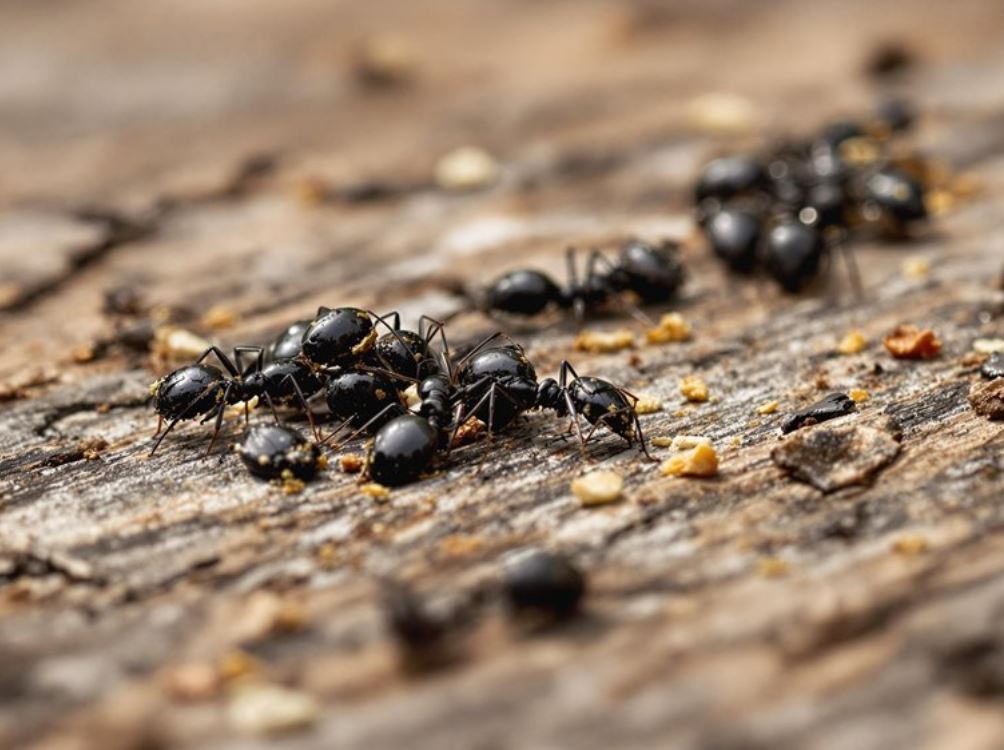
To put ant sleep into perspective, it’s helpful to compare it to the rest of the animal kingdom.
Table 2: Sleep Duration Across the Animal Kingdom
| Animal | Average Daily Sleep | Notes |
|---|---|---|
| Ant Queen | 9+ hours | Deep, regenerative sleep in safety of nest. |
| Worker Ant | 4-8 hours | Highly variable based on age and task. |
| Adult Human | 7-9 hours | Consolidated nocturnal sleep cycle. |
| Giraffe | 30 minutes – 2 hours | Short naps while standing, vulnerable when lying down. |
| Brown Bat | 19-20 hours | Nocturnal, sleeps during day in safe roosts. |
| Bullfrog | Potentially 0 hours? | Periods of rest, but no true sleep as defined. |
This comparison shows that while ant workers are moderately rested, their queen rivals mammals in her need for deep sleep. Their efficiency lies in the division of labor, ensuring the colony’s most vital organ (the queen) is always well-rested.
The Purpose of Sleep: Why Do Ants Need It?
Sleep is not a luxury for ants; it’s a biological necessity.
- Energy Conservation: Metabolism slows, preserving resources.
- Memory & Learning: Foragers need sleep to consolidate spatial memories of food locations and routes. Studies show sleep-deprived ants are worse navigators.
- Cellular Repair & Brain Maintenance: Like in all animals, sleep allows for crucial maintenance at a cellular level.
- Colony Efficiency: The shift-based sleeping patterns ensure the colony is always functional, maximizing productivity and survival.
Fascinating Sleep Facts About Ants
- They Take “Eye-Closing” Naps: Some ants assume a sleep-like pose with their head and antennae drooping down.
- They Might Dream: The discovery of REM-like phases in some insects suggests ants could experience dream-like neural activity.
- Social Sleep: Their sleep is a social behavior, coordinated by pheromones and colony needs. A sleeping ant is often surrounded by awake colleagues.
- Power Napping Champions: Nurse ants are the ultimate power nappers, mastering the art of restorative sleep in micro-bursts.
Conclusion: A Well-Rested Empire
So, how long do ants sleep? The answer is a nuanced “it depends,” but generally ranges from 4 to over 9 hours in a 24-hour period, dictated by a strict social hierarchy. The queen sleeps the most, while the tireless workers operate on shift schedules that keep the colony thriving non-stop.
This sophisticated sleep architecture is a key pillar of ant success. It ensures optimal performance, learning, and longevity for each individual, which in turn fuels the collective power of the superorganism. The next time you see a single ant marching tirelessly, remember that behind it is a complex, rhythmically resting society where even the hardest workers have scheduled downtime. The humble ant teaches us that in a perfectly organized system, even sleep is a shared responsibility.