
How Long Can Ants Live Without Food? The Surprising Truth

Ants are renowned for their resilience and complex social structures, but one of the most common questions about these tiny insects is: how long can ants live without food? The answer is more nuanced than you might think, varying dramatically by species, caste, and environmental conditions. Understanding ant survival not only satisfies curiosity but also provides insight into effective pest control and the remarkable adaptations of these social insects.
The Short Answer: It Depends on the Ant
At the most basic level, ants can typically survive without food for 1 to 2 weeks, with some species lasting even longer. However, this is a broad generalization. The true timeframe is influenced by a combination of factors including the ant’s role in the colony, its metabolic rate, and access to water.
As Dr. Eleanor Grant, an entomologist specializing in social insects, notes: “An ant’s ability to survive starvation is a direct reflection of its biology and social function. A lone forager might perish in days, while a well-fed queen in an optimal chamber can survive months. It’s a testament to the evolutionary design of the colony as a superorganism.”
Key Factors Influencing Ant Survival Without Food
1. Caste and Role Within the Colony
Not all ants are created equal within their society. Their lifespan without food is closely tied to their purpose.
- Queens: The reproductive centers of the colony, queens are built for longevity. They have substantial fat reserves and a slower metabolism, allowing them to survive months without food under ideal conditions, especially during founding phases or hibernation.
- Workers: The sterile females that forage, defend, and maintain the nest. Their survival time is shorter, typically 1-2 weeks without food, as they are active and have higher metabolic demands.
- Larvae: Developing ants require constant nutrition. They are the most vulnerable and may die within days without a food supply from worker ants.
2. Species-Specific Adaptations
Different ant species have evolved for different environments, impacting their resilience.
3. Environmental Conditions
Temperature and humidity are critical. In cooler conditions, an ant’s metabolism slows down, extending its survival window without food. Conversely, in hot, dry environments, ants dehydrate and starve much faster.
Comparative Survival Times of Common Ant Species
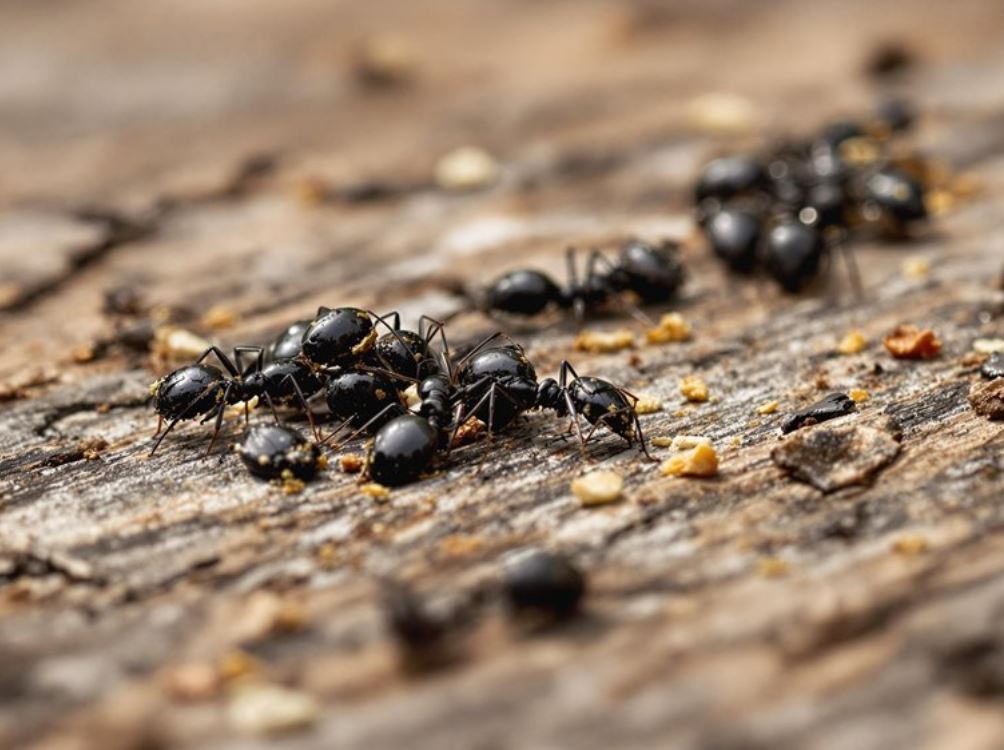
The table below illustrates how survival without food can vary across some common ant species, highlighting the role of species-specific adaptations.
| Ant Species | Estimated Survival Without Food (Workers) | Key Adaptations & Notes |
|---|---|---|
| Black Garden Ant (Lasius niger) | 7-10 days | Common in temperate regions; relies on frequent foraging. |
| Carpenter Ant (Camponotus spp.) | 7-14 days | Larger size provides more fat reserves; can be more resilient. |
| Fire Ant (Solenopsis invicta) | 10-14 days | Highly aggressive foragers; colony can shift resources efficiently. |
| Harvester Ant (Pogonomyrmex spp.) | Up to 2-3 weeks | Adapted to arid environments; known for storing seeds, which may be accessed. |
| Pharaoh Ant (Monomorium pharaonis) | 5-7 days | Tropical species with high metabolic rates; requires constant food/water. |
The Critical Role of Water
It’s crucial to distinguish between food and water. While ants can survive weeks without solid food, they can typically only last about 24-48 hours without water. Dehydration is a faster killer than starvation. Many ants obtain moisture from their food (like other insects or nectar), so a lack of “food” often means a lack of hydration as well.
The Colony as a Survival Strategy
An isolated ant is far more vulnerable than one within its colony. The social structure is its ultimate survival mechanism.
- Resource Sharing: Through trophallaxis (mouth-to-mouth food exchange), a colony can redistribute nutrients from well-fed individuals (or stored reserves) to those in need.
- Reduced Activity: In times of scarcity, the colony can enter a state of lowered activity to conserve energy.
- Stored Resources: Some species, like harvester ants, intentionally store seeds in granaries within the nest for lean times.
Implications for Pest Control
Understanding ant survival limits is practical for homeowners dealing with infestations.
- Cutting off food sources is a highly effective strategy. Consistently denying access to crumbs, spills, and pet food for over 2 weeks can significantly stress and reduce a worker population.
- However, remember that queens are exceptionally resilient. While workers may die off, the queen can sustain herself and resume laying eggs once food returns. Effective control often requires solutions that reach and eliminate the queen.
- Bait systems exploit the ants’ food-sharing behavior. Slow-acting toxins are carried back to the nest and shared, eventually reaching the queen and the brood.
Conclusion: A Testament to Resilience
So, how long can ants live without food? For a single worker ant, the clock starts at about a week. For a queen, it can be a matter of months. This incredible range underscores the success of ants as a group—their strength lies in their collective, not just their individual, endurance.
Their ability to survive scarcity is a powerful adaptation. By pooling resources and having specialized castes, the colony ensures its own persistence. The next time you see a lone ant scouting, remember it’s part of a sophisticated survival machine, one that can withstand challenges that would quickly overcome a solitary insect.