
Pavement Ants vs. Sugar Ants: Identification, Differences, and Control

Have you ever spotted a trail of tiny insects marching across your kitchen counter or along your driveway and wondered what exactly they are? For many homeowners, the terms “pavement ant” and “sugar ant” are used interchangeably, but this is a common misconception. In reality, these labels refer to different ants with distinct behaviors, habitats, and management needs. Understanding the difference is the first crucial step in effective pest control.
Dr. Eleanor Sterling, an urban entomologist, notes: “Misidentifying ants is the number one reason DIY pest control fails. What works for one species may be completely ineffective for another, wasting time and allowing the infestation to grow.”
What Are Pavement Ants? (Tetramorium immigrans)
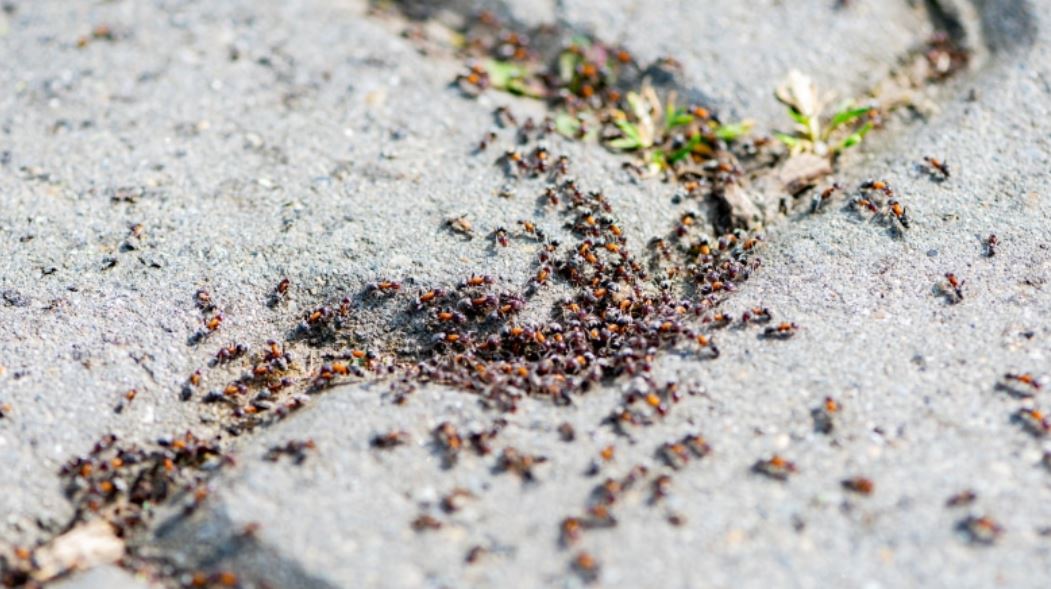
Pavement ants are a specific, identifiable species. They earned their name from their tendency to build nests in or under cracks in pavement, sidewalks, and driveways. You’ll often see small mounds of displaced soil or sand between the pavers or along concrete edges.
- Origin: Introduced to North America from Europe.
- Key Identifier: They have parallel grooves (lines) running along their head and thorax. Their bodies are dark brown to blackish, with paler legs and antennae.
- Habitat: Primarily outdoors under stones, pavement, logs, or in foundation cracks. They may enter buildings foraging for food.
- Diet: Omnivorous. They eat insects, honeydew from aphids, seeds, greasy foods, and sweets.
What Are “Sugar Ants”? A Catch-All Term
Contrary to pavement ants, “sugar ant” is not a scientific term. It’s a colloquial nickname used to describe any small ant that has a strong preference for sweet, sugary foods. This can refer to several species depending on your geographic location.
- Common “Sugar Ants”:
- Odorous House Ants: Emit a rotten coconut smell when crushed. Very common household invaders.
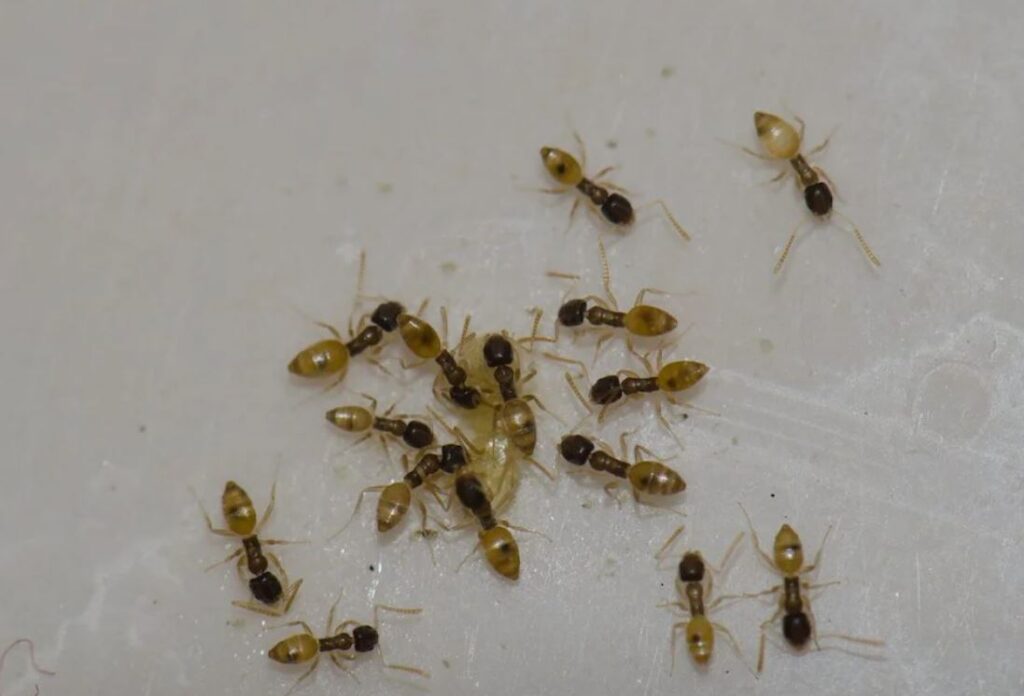
- Pharaoh Ants: Tiny, light yellow to red ants. A major concern in hospitals and multi-unit buildings.
- Acrobat Ants: Raise their heart-shaped abdomen over their head when disturbed.
- Even Pavement Ants can be called “sugar ants” when they’re raiding your kitchen for sweets!
Mark Sheperdigian, BCE, Vice President of Technical Services at Rose Pest Solutions, clarifies: “When a customer says ‘sugar ant,’ we have to be detectives. The treatment for an odorous house ant colony in a wall void is vastly different from a pavement ant nest under a driveway slab.”
Side-by-Side Comparison: Pavement Ant vs. Typical “Sugar Ants”
To clearly visualize the distinctions, here is a breakdown of key characteristics.
| Feature | Pavement Ants (Tetramorium immigrans) | Common “Sugar Ants” (e.g., Odorous House Ants) |
|---|---|---|
| Scientific Specificity | A single, distinct species. | A generalized term for multiple sweet-loving species. |
| Appearance | Dark brown/black, 2.5–3mm long, with parallel lines on head/thorax. | Varies by species. Often dark brown (Odorous), tiny and yellow (Pharaoh). |
| Key Identifier | Grooved head and thorax; nest mounds in pavement cracks. | Odor when crushed (for Odorous House Ants). Strong preference for sweets. |
| Primary Nesting Site | Outdoors under pavement, stones, next to foundations. | Often indoors in wall voids, under floors, or near heat sources. |
| Diet | Omnivorous: sweets, greasy foods, seeds, insects. | Heavily偏向于 sweets, honeydew, but will also forage for proteins. |
| Swarming Season | Spring and summer (reproductive flights). | Varies; Odorous House Ants often swarm after rain in summer. |
How to Manage and Prevent Infestations
Correct identification is paramount. Here are targeted strategies:
For Pavement Ants:
- Locate & Treat Nests: Follow foraging trails back to nest mounds outdoors. Apply targeted insecticidal dust or bait into cracks.
- Outdoor Barrier: Create a perimeter treatment around your home’s foundation.
- Seal Entry Points: Caulk cracks in slabs, driveways, and foundation walls.
- Sanitation: Keep patios and driveways clean of food debris.
For Common “Sugar Ants” (like Odorous House Ants):
- Use Sweet Baits: Gel or liquid baits containing borax or other slow-acting insecticides are highly effective. Workers carry the bait back to the hidden nest.
- Find Trails & Entry Points: Wipe trails with vinegar to disrupt pheromone paths. Seal cracks around windows, doors, and pipes.
- Eliminate Food Sources: Store sugar, syrup, honey, and fruit in airtight containers. Wipe down counters and floors regularly.
- Avoid Sprays: Repellent sprays can scatter ants, causing them to split colonies and worsen the problem.
Conclusion: Knowledge is Power
While all pavement ants can act like “sugar ants,” not all “sugar ants” are pavement ants. The critical takeaway is that pavement ants are a specific outdoor-nesting species identified by their grooved bodies, while “sugar ants” is a generic term for various sweet-seeking ants, often nesting indoors.
Proper identification—using the visual cues and behavioral clues outlined above—will save you significant time and frustration. If an infestation persists or is large-scale, consulting a professional pest control service is always the most reliable course of action. They can accurately identify the species and implement a targeted, effective treatment plan to reclaim your home from these tiny invaders.