
Carpenter Ants vs Termites: Your Ultimate Guide to Identification and Control

Discovering wood-damaging insects in your home can be alarming, but knowing whether you’re dealing with carpenter ants or termites is the critical first step toward effective control. These two pests are often confused, but their biology, behavior, and the solutions required are vastly different. Misidentification can lead to ineffective treatments and escalating structural damage. This comprehensive guide will equip you with the knowledge to identify, understand, and address these common invaders.
“Early and accurate identification is the cornerstone of effective pest management. Confusing carpenter ants with termites can cost homeowners time, money, and unnecessary structural damage.” – Dr. Eleanor Vance, Urban Entomologist
Physical Appearance: Side-by-Side Comparison
The most immediate way to differentiate these pests is by their physical characteristics.
| Feature | Carpenter Ants | Termites |
|---|---|---|
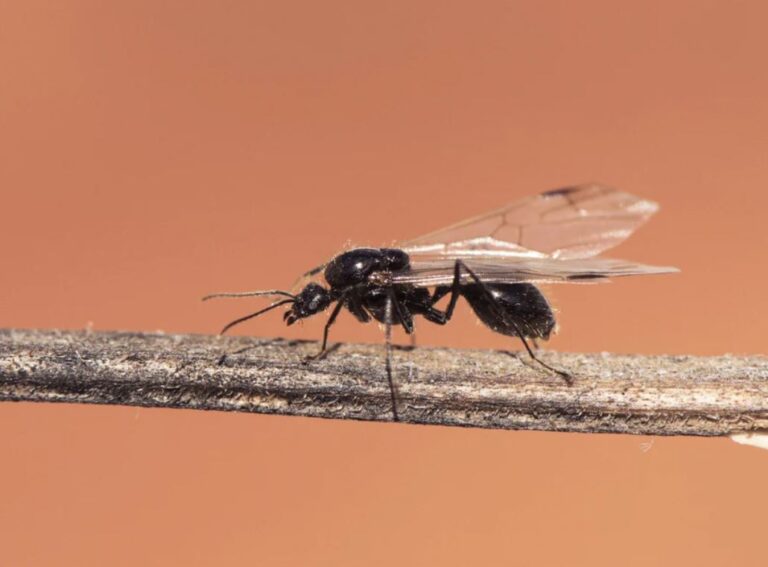
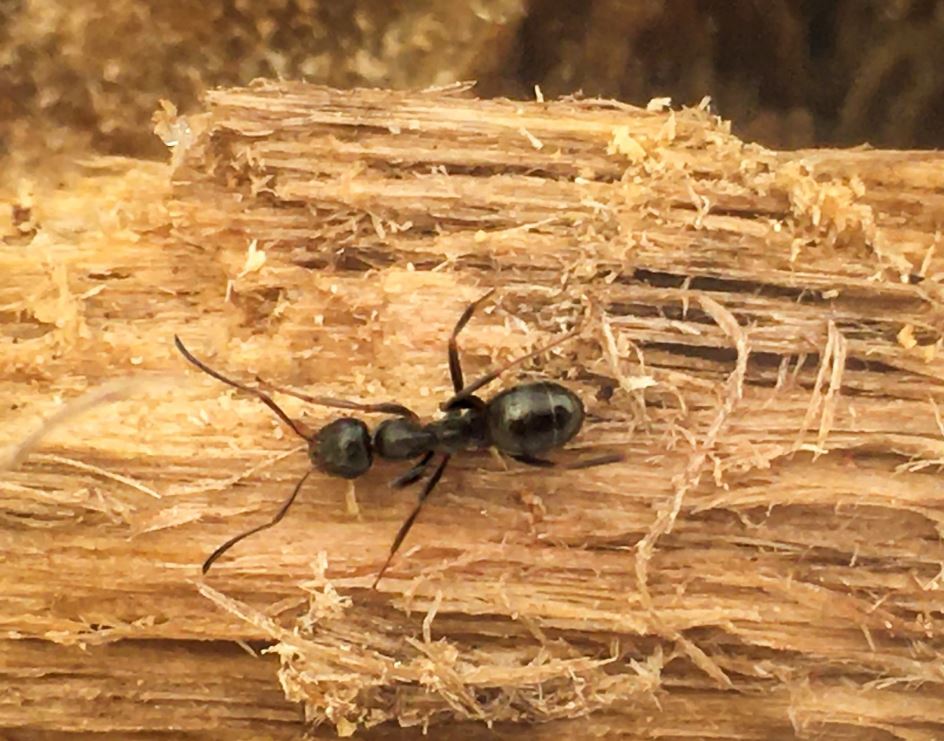
| Body Shape | Pinched, segmented “waist” | Rectangular, no defined waist |
| Antennae | Bent or “elbowed” | Straight, beaded appearance |
| Wings (Swarmers) | Front wings larger than hind wings; wings discarded after swarm | Four wings of equal size and length; wings easily shed |
| Color | Typically black, red, or a combination | Workers: Pale/cream. Swarmers: Dark brown or black |
| Size | ¼ to ½ inch long | ⅛ to ¼ inch long |
Key Insight: If you find an insect with a pinched waist and bent antennae, you’re looking at an ant. A uniform, straight-bodied insect with straight antennae is a termite.
Behavior and Habitat: Understanding Their Roles
Both insects damage wood, but their motivations and methods are fundamentally different.
Carpenter Ants are excavators, not consumers. They tunnel through moist, decaying wood to create smooth, clean galleries for nesting. They do not eat the wood; they push it out, leaving behind piles of coarse, sawdust-like frass that often contains insect parts.
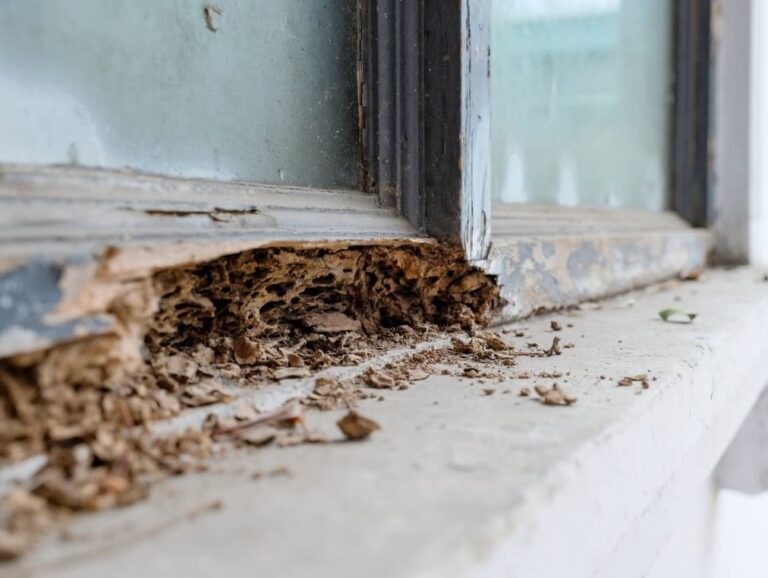
Termites are digesters and true consumers. They eat cellulose from wood for nutrition, creating rough, mud-caked galleries lined with soil and feces. Subterranean termites build iconic mud tubes to travel between their colony and food source while maintaining moisture.
“Think of carpenter ants as renovation crews clearing out soft wood for apartments, and termites as a hungry mob slowly eating your house from the inside out.” – Mark Henderson, Licensed Pest Control Operator
Signs of Infestation: What to Look For
Recognizing the evidence left behind is crucial for identification when the insects themselves aren’t visible.
| Sign of Damage | Carpenter Ants | Termites |
|---|---|---|
| Wood Galleries | Smooth, clean, sandpapered appearance. Follows wood grain. | Rough, ragged, caked with mud/soil. Often against grain. |
| Frass/Droppings | Coarse sawdust pile (kick-out holes) containing insect parts. | Dry, granular pellets (drywood) or mud-like (subterranean). |
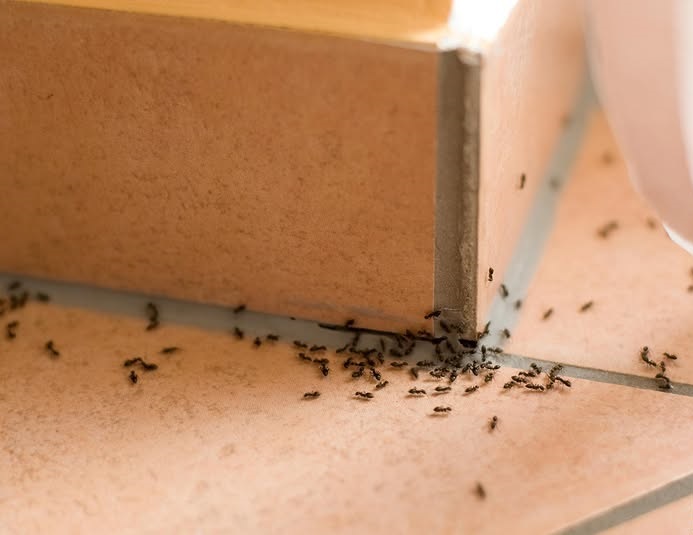
| Other Evidence | Rustling sounds in walls. Foraging trails of live ants at night. | Mud tubes on foundations. Hollow-sounding wood. Swarmers’ discarded wings. |
| Moisture Dependency | Require moist, compromised wood to start a colony. | Subterranean species require constant moisture contact. |
Structural Damage: Severity and Speed
This is where the distinction becomes critically important for your home’s integrity.
Carpenter Ant Damage: Typically progresses more slowly than termite damage. The primary structural risk comes from large, multi-year colonies hollowing out key support beams. They often indicate a moisture problem (leaky roof, poor drainage) that needs to be fixed.
Termite Damage: Can be devastatingly fast and widespread. Subterranean termites work 24/7 and can cause significant structural compromise in as little as 6-24 months. Their damage is often hidden behind walls and can be extremely costly to repair.
Prevention and Control Strategies
Effective management depends entirely on correct identification.
For Carpenter Ants:
- Moisture Control: Fix leaks, ensure proper ventilation, and eliminate wood-to-soil contact.
- Remove Habitat: Clear dead trees, stumps, and debris near the home.
- Baiting & Direct Treatment: Use non-repellent insecticides and protein/ sugar-based baits to target the central colony.
For Termites:
- Soil Barriers: Professional application of termiticides creates a chemical shield.
- Baiting Systems: In-ground stations monitor for and eliminate colonies.
- Physical Barriers: Termite-proof materials (like sand or mesh) during construction.
- Fumigation: For extensive drywood termite infestations (tenting the entire structure).
Crucial Note: While some carpenter ant control can be DIY, termite infestations almost always require professional intervention due to the complexity and permanence of treatment solutions.
Conclusion: Key Takeaways for Homeowners
Understanding the difference between carpenter ants and termites empowers you to take swift, appropriate action. Remember:
- Ants have pinched waists and bent antennae; termites are rectangular with straight antennae.
- Ants excavate wood; termites consume it.
- Ants leave sawdust-like frass; termites produce mud tubes and soil-filled galleries.
- Both demand attention, but termites pose a more immediate and severe threat to your home’s structure.
If you suspect either pest, promptly consult a licensed pest management professional for a definitive diagnosis and a targeted treatment plan. Early action is your best defense against costly structural damage.